
Benvenuto! (welcome)  

Photo Sharing and Video Hosting at Photobucket

DeTomaso Internet Community


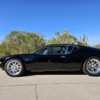
PI member John Sobaszek and his gorgeous GT5-S
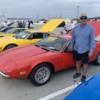
Las Vegas Fun Rally, April 2007
(click on the picture to view a larger image)

Pantera by DeTomaso

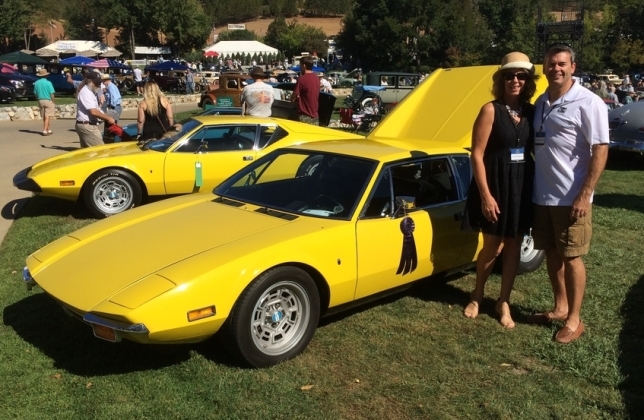
Designed in 1969, the Pantera combines captivating Italian coachwork, a mid-engine race car chassis and a high performance Ford V8 engine.

The Pantera was assembled in Modena Italy by DeTomaso Automobili, a manufacturer of specialty automobiles founded in 1959 by former race car drivers Alejandro and Isabelle DeTomaso. The Pantera was designed for the Ford Motor Company at the request of Lee Iacocca, within Ford it was referred to as "Lee's car". They were sold in North America at specially selected Lincoln/Mercury dealerships.

The Pantera's coach was designed by Carrozzeria Ghia under the direction of Tom Tjaarda, who had recently resigned a position at Pininfarina prior to taking the helm at Ghia; a position vacated by Giorgetto Giugiaro in 1969. Other coach designs credited to Mr. Tjaarda in that period include the Ferrari 365 GT California Spyder, the Mercedes 230 SL Coupe and the Fiat 124 Spyder. Mr. Tjaarda has enjoyed an enduring and prolific career in the automotive design industry and remains active in the industry to this day.

The Pantera's chassis was devised under the direction of Gian Paolo Dallara, who had resigned a position at Lamborghini to design race car chassis for DeTomaso. The Pantera's mid-engine chassis was a monocoque design featuring a 98.4 inch wheelbase, 4 wheel independent suspension with unequal length A-arms and coil over shock absorbers, anti-sway bars front and rear, 4 wheel disk brakes, magnesium wheels (15" x 7" and 15" x 8") shod with V rated radial tires and manual rack and pinion steering. Only 42% of the Pantera's 3100 pounds rested upon the front tires. Other sports car chassis devised in that period under Mr. Dallara's direction include the Lamborghini Miura and the BMW M1. Mr. Dallara's present-day company is one of the motorsport industry's eminant design houses of race car chassis.

The Pantera's engine was Ford's 351C 4V V8; a production motor displacing 351 cubic inches (5.75 liters). Conceived at the peak of Ford's "Total Performance" era, the 351C (also known as the 351 Cleveland) was the last OHV V8 designed by the Ford Motor Company. The engine was designed under the management of Ford's executive engineer for advanced engines, Bill Gay, and assembled both in the US and in Australia. The motor was assembled in the US from 1969 to 1974 in Brook Park, Ohio at Ford's Cleveland engine plant number two, hence the name 351 Cleveland. It was assembled in Australia beginning 1972 in Norlane, Victoria at Ford's Geelong engine plant. Australian production of the 351C officially ended in 1982, but production unofficially continued at least through 1984. The advanced design of the motor's race-bred cylinder heads made them capable of supporting more horsepower per cubic inch and more rpm than the heads found on any other mass produced motor manufactured by any US or Australian automaker at that time. As installed in the Pantera the motor produced 280 horsepower, however it was easily modified to produce up to 500 horsepower while retaining a street-worthy state of tune. Modified for various forms of auto racing, the motor was ultimately capable of producing 750 horsepower, naturally aspirated and with the stock cylinder heads. Due to this potential for very high output the 351C became a dominant US and Australian racing motor during the 1970s and 1980s. Finishing the Pantera's drivetrain was a German manufactured ZF model 5DS-25 five speed manual transaxle with limited slip differential; the same transaxle that had been installed in Ford's LeMans winning GT40 race cars.

In 1971 the Pantera trumped its musclecar, Corvette, Jaguar and Porsche competition both in looks and in performance; it was the ultimate muscle car and sports car and ruled the streets on two continents. It accelerated to 60 mph in 5.5 seconds, covered the 1/4 mile in 13 seconds flat and had a top speed of 150 mph with a 4.22:1 final drive in the ZF. With a 3.77:1 final drive the top speed stretched to 170 mph. Automotive journalists of the time were unanimous in praising the Pantera's handling, claiming it set new standards for responsiveness and road holding in production automobiles.

Pantera Evolution

The first version of the Pantera was built to "Ford specification", it was the only Pantera imported to North America by Ford, and it was marketed in Europe during the same period. Details in the trim of the Ford spec Pantera evolved during its 4 years of production, which has lead enthusiasts to adopt the terminology pushbutton ('71), pre-L ('71-'72) and L ('73-'74) to distinguish the variations in trim. The variations in trim reflected the transition to high volume production in 1971 and changes needed to meet new US safety and exhaust emissions regualtions for the 1973 model year.

The first evolution of the Pantera occured in November of 1971, only seven months after assembly line production had began in Modena. The Ford spec Pantera was joined in Europe by a new model called the Pantera GTS. The GTS offered performance improvements such as wider magnesium wheels (15" x 8" and 15" x 10") with Pirelli P7 tires, ventillated brake disks, higher rate suspension springs, an improved exhaust system and Holley model R4777 Carburetor. The mounting location of the steering rack assembly was relocated to reduce roll understeer. Cosmetically it featured small wheel well flares and a paint scheme that blacked-out the sides of the car below the beltline and the trunk and engine compartment hoods (bonnets). The interior featured the use of higher quality upholstrey materials instead of the man made materials employed in the Ford spec Pantera. Ford chose not to import this model to North America.

Two race versions of the Pantera were also developed and assembled in the time period of December 1971 through March 1972, the Group 3 and Group 4 Panteras. The Group 3 race car added further refinements strictly for racing beyond the improvements included with the GTS. The Group 3 refinements included a roll cage, a plexi-glass rear window, deletion of sound deadening material, a brake system employing Lockheed 3 piston calipers, heavy duty rear axles, racing seats, stiffer suspension with Koni shock absorbers and adjustable anti-sway bars, tail pipes with modified "straight through" mufflers, a high capacity intake manifold and carburetion system and a high capacity oil pan. The Group 4 Panteras were developed specifically for racing in the GT class of the 1972 World Endurance Racing Series. Featuring many of the changes found on the Group 3 race car, the Group 4 Pantera also included aluminum panels for doors and bonnets, a chassis lightened with holes, 4 piston Girling brake calipers, stripped interior, plexiglass side windows, bronze suspension bushings, fiberglass wheel flares to accomodate wide magnesium wheels (15" x 10" and 15" x 14"), a racing motor provided by Bud Moore engineering of the USA and an unmuffled exhaust system. The Group 3 Pantera was available by special order from the factory from 1972 through 1984 whereas only a fixed number (eight) of Group 4 Panteras were built in March 1972.

Hot on the heels of the November 1971 GTS introduction, DeTomaso took the next evolutionary step in the development of the Pantera by offering the "wide body" stance of the Group 4 race car in a road going model known as the GT4. The GT4 was a variant of the GTS offered from 1972 to 1979, featuring the large wheel arch flares and wide magnesium wheels found on the Group 4 race car. The first GT4 Panteras were assembled in January 1972, but due to the fact that demand for the Group 4 racing Pantera exceeded the eight that had been produced, all six of the first GT4 road cars were immediately modified by the factory to Group 4 specification and supplied to race teams in Europe.

When Pantera enthusiasts in North America learned of the GTS offered to European customers they insisted Ford should make the same model available to North American customers. Ford complied with this request for the 1974 model year by offering a North American version of the GTS. However the GTS offered to North America was no more than a variation in badging and paint, none of the mechanical changes made to the European GTS were made to Ford's GTS, it was mechanically identical to the Pantera L. The Ford/American GTS was the fourth and last variation in trim for the Ford spec Pantera. It was only offered during the 1974 model year, although for emission reasons the 40 GTS models sold in California were redocumented as 1973 vehicles.

When North American importation ceased, the factory ceased assembly of the US spec Pantera, and the Pantera GTS became the base road version sold by the factory. In addition to the GTS, the factory continued to offer the Group 3 race car and the "wide body" GT4. The GT4 eventually evolved into a new model known as the GT5. The GT5 was officially introduced to the public in 1980, although production of the GT5 may have begun before its formal introduction. Like the GT4 the GT5 featured the same mechanical specification and coachwork as the GTS with the addition of fiberglass flares to the wheel arches, a deep frontal air dam, ground effects side skirts and the wide magnesium wheels borrowed from the Group 4 race car. A popular option offered with the GT5 was a large delta wing rear spoiler, similar to the spoiler found on the Lamborghini Countache.

The wide body GT5 evolved again in late 1984 with the introduction of the GT5-S. The GT5-S replaced the fiberglass wheel arch flares of the GT5 with steel flares more subtly integrated into the lines of the coachwork. The integral wheel arch flares required a revision to the Pantera coachwork, therefore the GT5-S could not be assembled using the GTS coach as had been done with the GT4 and GT5. Since 1972 DeTomaso's European customers had the choice of a GTS, a wide body (GT4 or GT5) or a Group 3 racing Pantera. As of 1985 those choices were narrowed to the GT5-S. The GT5-S remained in production through 1990, when it evolved into the final version of the Pantera, the Pantera Si. Besides coachwork updated by Marcello Gandini, the Si offered further mechanical refinement to the Pantera, including improved front suspension geometry, a tubular steel rear sub-frame, 17 inch magnesium wheels, Brembo brakes, a 5.0 liter fuel injected Ford V8 motor rated at 305 horsepower and the transition to a Getrag six speed transaxle in the last four cars assembled.

Pantera Sales and Production

The Pantera went on sale in North America and Europe in the spring of 1971 as the muscle car era in the US was coming to a close. 5262 Panteras were imported into the US by Ford from 1971 through 1974 (based upon US DOT data). During that same period 1118 Panteras were sold outside the US by Ford in Canada and by DeTomaso in many countries outside North America, predominantly in Europe. Pantera assembly averaged 40 cars per week while DeTomaso was supplying Panteras to Ford. DeTomaso continued selling Panteras in markets outside North America when Ford ceased North American importation, assembly slowed however to about 1 car per week; only 274 were assembled between 1975 and 1979.

By 1980 the public had become infatuated with exotic Italian sports cars (i.e. supercars) attributable to the exposure of the Ferrari 308, Ferrari Daytona, Ferrari 512BB & Lamborghini Countache on television and in movies. The Pantera competed successfully as a supercar with Ferrari and Lamborghini during the 1980's with the GT5 and GT5-S models. Many teenage boys (and their fathers) had posters of Panteras on their bedroom walls during the 1980s. 503 Panteras were built in this era (1980 - 1993); many of them were indirectly imported into North America as grey market vehicles, and some were directly imported by Amerisport.

Altogether 7157 Panteras were assembled between 1971 and 1993 (production figures are based upon the best information available to us at this time and are subject to revision without notice).

Pantera Tuning

Foreshadowing the present-day popularity of sport compact, sports car and exotic car tuning, the Pantera is also the original tuner car. Supported by a small network of performance shops specializing in Pantera tuning, Pantera owners have been modifying their cars, pushing the performance envelope of both the chassis and the motor, keeping their cars up to date with the latest technology and competitive with the latest sports cars, since the 1970s. The Pantera's chassis and motor have displayed amazing performance potential as owners have kept their cars competitive with successive generations of sports cars for over three decades. Unlike other Italian marques where originality dictates the value of a vehicle, a Panteras' value can be predicated on what modifications have been performed and who performed them. Wide body Group 4, GT5 and GT5-S replicas are often valued by buyers as much as the factory orignal versions. A Ford spec Pantera tuned by Hall Pantera can have an equivalent value as that of a rare GT5-S in similar condition. Cooling system improvements, electronic ignitions, 17 inch "Campagnolo Clone" wheels, modern gas filled shock absorbers, charging system and air conditioning system upgrades, GTS exhaust systems, aftermarket steering wheels and improved seating are modifications that are universally sought by the discerning Pantera shopper.

Pantera Owners

Amongst the community of Pantera owners you'll find the largest segment of owners have performed a few select upgrades to their cars with the purpose of correcting problems with the cars design, or to personalize them, or to improve the cars performance. There are other owners who prefer to maintain or restore their cars to showroom original condition. There are a few owners who have modified their cars for racing and another segment who have wildly modified their cars. Some Panteras spend most of their time in garages, some are trailered to shows or racetracks, others are driven regularly. No matter which segment of the hobby a Pantera owner belongs to they receive full support and acceptance from the other members of this community. No one is ostracized or frowned upon for how they have chosen to enjoy their car. This freedom is one aspect that differentiates the Pantera hobby from that of other Italian car marques. Pantera owners are strong individualists, they consider the freedom to do what they want with their cars a breath of fresh air and one of the main assets of their hobby.

The support Pantera owners show one another is yet another admirable feature of this community. You shall not observe this community for long before you realize that the owners are a breed more special and unique than the cars they drive; they are the biggest asset of this hobby. Many Pantera owners were attracted to this hobby or remain involved in this hobby because of their fellow owners and the friendships they have developed.

Your Invitation

Anyone may enter the forums and view the messages, however to view certain pictures and to post your own messages you must be a member. Whether you are simply curious about Panteras and DeTomasos, considering a future purchase, a new owner, or a long time owner, we invite you to join this community; membership in this community is free.

This internet community and its forums are provided by Pantera International Car Club to further the club's mission as an information exchange for Pantera and DeTomaso enthusiasts worldwide. Founded in 1973 and authorized by DeTomaso Modena S.p.A., Pantera International Car Club is the largest international Pantera and DeTomaso enthusiast organization. We also invite you to join the club and begin receiving our 84 page, color publication, discounts on parts and merchandise and other services.

We ask you to please remember this community's sponsor PI Motorsports, Inc. when you are buying parts; repairing, restoring or modifying your car; purchasing a Pantera; or selling your Pantera.

Regards, George, Justin and Adam Pence, Board of Directors.

  powered by eve community  


Newest Members 


Chat Rooms 

All information presented within these forums is the copyrighted property of Pantera International Car Club, Inc